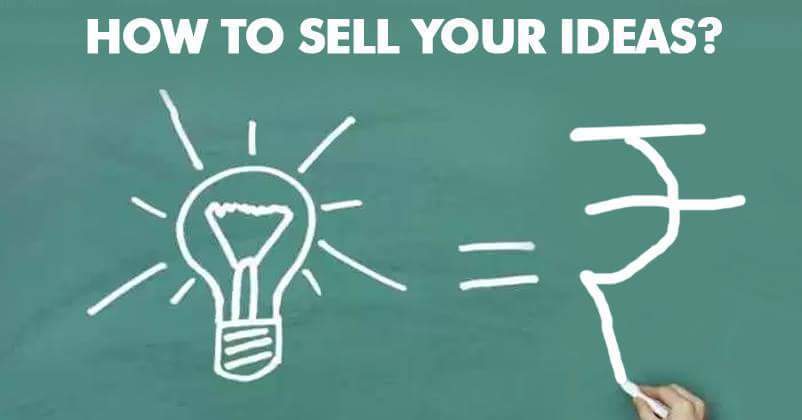
Perhaps you’ve got a keen mind for inventing–but not much of a head for business. Or maybe you’re good at both, but you’d rather focus your time on developing ideas rather than launching a full-scale business. Fortunately, there’s an option that suits your needs perfectly: licensing your invention idea. Licensing is simply the process of selling your idea to a company that’ll develop it fully, taking on all the business-related tasks that launching a new product involves. Licensing can also be a great option for those whose financial resources are very limited.
Just as there are steps to starting your own business, there’s a smart way to approach licensing your invention. I break it down here into three main steps.
Step 1: Gather Information
Yes, it’s the information age–which means the more info you’re armed with, the better off you’ll be. Licensing your idea is no exception. Before you even consider approaching prospective companies to sell your idea, be sure you’re clear in the following areas:
- Know your market. This means gathering as much feedback as possible on your own invention idea. Focus group testing, even among friends and family, is one good way. You should also compile data on similar and competing products–info on what’s out there, what’s selling and who’s producing it, for example.
- Do some legal legwork. Go as far as you can to determine if your invention is patentable or if it can be produced without infringement on other filed patents. A preliminary patent search on www.ustpo.gov will get you on your way. Also, the more information you can gather about regulatory issues or necessary legal steps, the better.
- Look into production. Learning about the production process can be extremely helpful, particularly if your invention calls for unique materials or unusual manufacturing techniques.
Step 2: Prepare a Professional Presentation
After you’ve gathered all the relevant information, you’ll need to present it to potential licensors. Along with your most effective tool–a three-dimensional prototype model–you should develop a simple sell sheet to convey all the information you’ve gathered.
Your sell sheet should be a one- or two-page document that clearly states the following:
- The problem, challenge or need the product meets
- The product’s features and benefits
- Your product’s market
- The legal status of your invention (ie: patent pending, copyright or trademark info)
You should also develop an introductory letter to accompany your sell sheet, which introduces yourself, explains why you’re contacting the licensee, and sets a time when you plan to follow up.
Step 3: Pinpoint Your Targets
You’ve gathered and prepared your information. Now what? Your next step is to determine the most appropriate contacts for this awesome new business opportunity. As a first step, I recommend you create a list of at least 50 prospective targets. As with any type of sales, the more prospects, the better. It’s a numbers game, and most companies will turn you down for one reason or another. Also note that a more focused list will bring you more effective results.
So how can you identify companies that might make a good fit? If it’s a consumer item, it’s as simple as a shopping trip around town. Go to a store where you’d expect to see your product sold and jot down the names of manufacturers who produce similar products. You may also be familiar with many of these companies from your prior market research.
Another way to identify prospective manufacturers is to identify the trade association that serves the industry in which your product will fall. Visit their websites and look for member lists. Some trade associations list the manufacturers scheduled to exhibit at their upcoming trade shows.
Online databases can also be a great resource. Local public business libraries are often linked to database systems that allow you to search for companies in specific industries. And, from your own computer, you can visit www.hoovers.com , a great online database that provides information about many large-sized companies. The site even enables you to find companies that have specific key words in their description.
Step 4: Qualify Your Targets
Once you’ve generated your list of 50 or so companies, you’ll want to prioritize them–or “qualify” them based on which will make a best fit with you and your product. There are a number of factors to consider when qualifying prospective licensees:
- Size. Large companies are easy to identify and generally have terrific distribution. However, small companies might stand to benefit more from your invention–and often make better prospects. Small companies generally have less “in house” product development staff and are less burdened by red tape and multiple layers of bureaucracy, which can make them easier to deal with.
- Geography. While you don’t need to limit yourself to local companies, they do offer advantages. Companies in close proximity allow you to leverage any contacts you might have locally, and set up face-to-face meetings (which is always valuable).
- Similar product line. The closer your invention matches a company’s already existing product line (as long as it isn’t directly competing), the more sense it probably makes for them to take it on–especially if it gives them a product that competes with a rival company.
- Access to a decision maker. The more easily you can identify and directly reach the decision maker, the more efficient your contact with a prospective licensor will be. (Note: if after several calls you can’t determine who the proper contact is–or get in touch with him/her–you’re better off focusing on other targets.)
- Company policy. Some companies’ policies for accepting submissions are more inventor-friendly than others.
- Manufacturer reputation. Find out the company’s track record for working with inventors, and if possible get personal references from those who’ve gone before you.
Step 5: Make the Sale
You’re now armed with information, presentation materials and a hot prospect list. How do you know you’re getting a good deal? Understand there are no set rules or terms when it comes to negotiating a licensing agreement. The perfect agreement is one that gives both you and the manufacturer exactly what you want. Therefore the terms are completely negotiable and can vary dramatically.
However, do keep the following points in mind as you’re negotiating your deal. First, set realistic expectations. In other words, don’t expect a million-dollar deal–it’s doubtful you’ll retire after licensing your first product. Second, go for the gusto. Most ideal for you, the inventor, is to get as much up-front cash, as high a royalty, and as high an annual minimum payment as possible. Of course, the manufacturer will be gunning for less risk–which means a lower up-front payout, lower minimum payment requirements, and as low a royalty percentage as possible. But what exactly do these terms mean, and how can you get the best deal for your invention idea?
- Up-front payment. This is the money that the licensee pays the licensor up front, before development or sales even begin, for the assignment of the rights. This can be an outright payment, but most commonly takes the form of an advance against (future) royalties. The amount of up-front payment varies. However, it’s not unusual for an inventor to seek an up-front payment that covers the cost of her patent filing. Another way to come to an agreeable sum is to base your payment on projected sales expectations for the first year.
- Royalties. These are the payments made to the licensor based on a percentage of the licensee’s product sales. So, if you make a 2% royalty, that means you’ll receive 2% of the wholesale price of each unit sold. The typical royalty range tends to run from 2% to 5%. Again, the further along or more proven the invention, the less risk for the manufacturer and the more likely you’ll get an up-front payment or higher royalties. From my perspective, the royalty is the most important element of the agreement, because if the market responds to the product, the manufacturer will do well and the inventor can earn a good revenue
- Annual minimum. This is the contractual term that requires the licensee to pay the licensor a minimum amount of royalties, irrespective of the actual royalties due from sales. To me, the purpose of annual minimums is to ensure that the manufacturer places sufficient effort and resources behind promoting the product. Therefore, I believe that annual minimums are most important in the initial years of the agreement–when the product is being launched–to ensure that the licensee adequately prioritizes this item when deploying sales resources.
- Exclusivity. Most manufacturers will want to have exclusive rights to distribute the product globally. However, this is subject to negotiation. Depending on each party’s motives, the agreement could actually divide up the markets in many ways.
It’s important to note that these four components are inter-related: meaning the more you get in one area, the more you might have to concede in another. As with any negotiation, both sides will likely make concessions. Decide which of these components will best meet your short- and long-term needs, and negotiate from there. There are numerous books that provide techniques in negotiation. The most salient tip I can offer is to use a “non adversarial” approach in which your goal is to create terms that are a win-win for both parties. Good luck!
Source: https://www.entrepreneur.com/article/83496