Savings and Investments Series: Investing for the Long Term

INVESTING FOR THE LONG TERM
Although shares are a higher risk asset (their value could go down as well as up), investing in the stock market for the long term generally gives you a better return for your money, because any losses you suffer are recouped in time.

So if you’re investing on your child’s behalf, or for your distant retirement, time is on your side. Over 10 or 20 years, the value of the shares you hold should be expected to, at least, even out, if not increase. And an amount of compound interest can accrue on investments over such long period of time.

Since the value of shares can rise and fall quite quickly, you should invest for the long term. In practice, the stock market rises and falls in waves, said by some to be five-year waves, and this why many people advise you to invest for at least a five-year period.

Savings and Investments Series: Choosing the Right Strategy

HOW TO CHOOSE THE RIGHT INVESTMENT STRATEGY
Before you invest, you need to consider your circumstances and how these may change. If you tie up money in an investment now, will you need to have access to it in the next few years? Are you planning any major expenses – like having children, moving to a house, or both?

Ask yourself how much of a risk you’re prepared to take. The longer you plan to invest, the more risk you can normally afford to take

Savings and Investments Series

EQUITY FUNDS
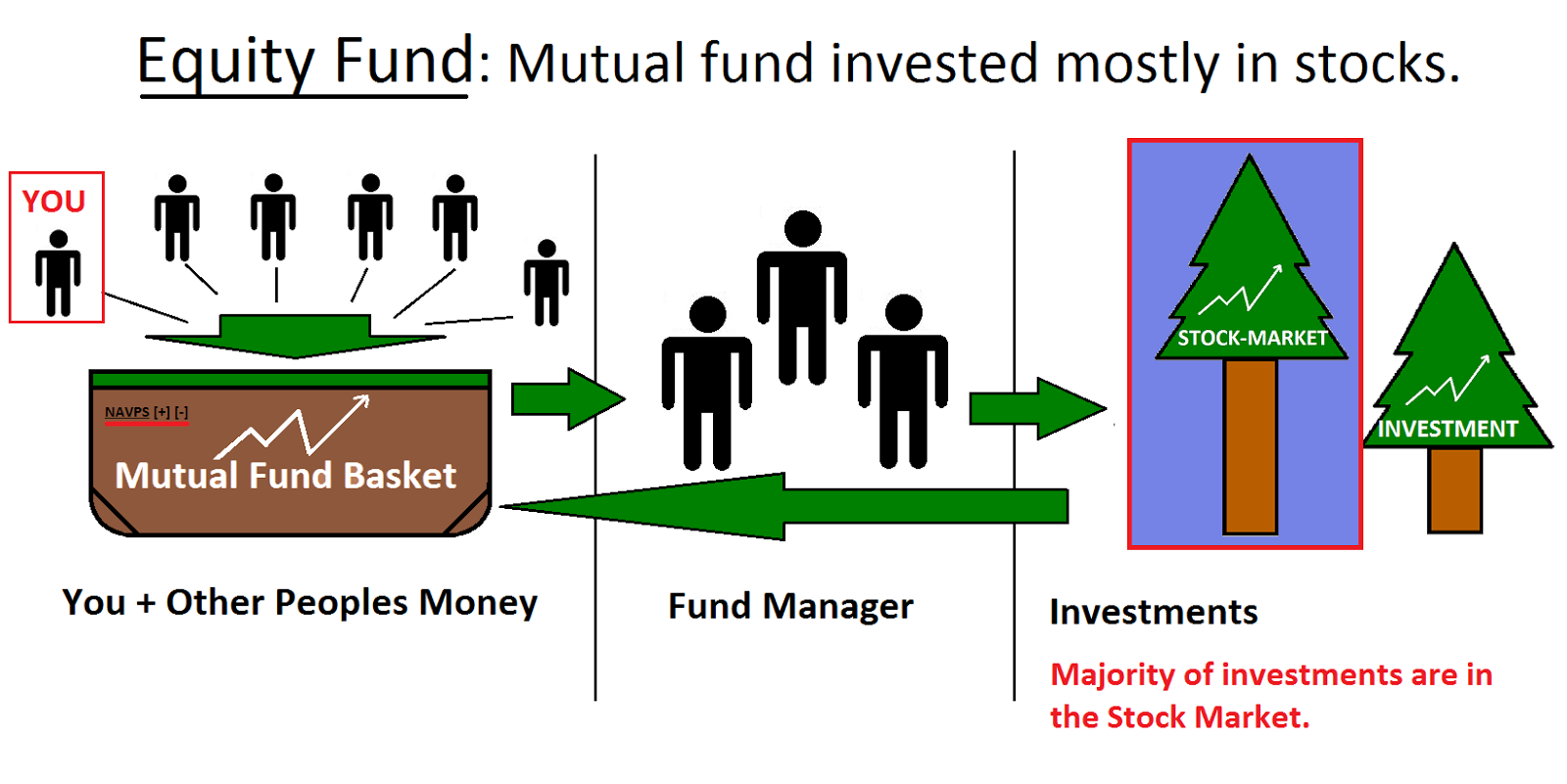
Alternatively, you can save yourself a lot of trouble and invest in an equity fund. As the name implies, an equity fund is a fund managed by professionals, which invests in a range of equities and, most importantly, spreads the risk among all the investors in the fund. However, some funds have high charges, which substantially eat into your returns; so check these out in advance. And again, you must choose a fund which has the degree of risk you are comfortable with.

The stock market can be very volatile and the value of shares can fall sharply and suddenly. In the long term, however, shares are likely to increase in value.

Savings and investments products come in all shapes and sizes. To find the best products to suit you, you need to think about your own unique circumstances, your investment preferences and, most importantly, your investment goals.

Savings and Investments Series: Equities/Shares…

EQUITIES, SHARES…
Shares, also known as equities, are the preferred ‘real’ asset for many investors. Buying shares in a company provides you with a portion of the company’s value and a stake in its profits, which are distributed yearly or half-yearly to shareholders as dividends.

Broadly speaking, the value of a company should keep pace with inflation value because the prices it charges for goods and services rise with inflation. If you invest in a company for a long enough time, and if the company succeeds in growing the overall of its business, the value of its shares may grow faster than inflation. This can provide you with substantial capital growth.

Of course, the opposite may happen and the share value may fall. Investing in shares always carries a degree of risk, although as we shall see, there are various ways to reduce this to a level I find acceptable.

You can buy shares yourself through a stockbroker. If you have experience of a particular industry, you can use it to your advantage when you make an investment decision. But deciding which shares to buy is difficult and, once again, time consuming. You will have to research potential stocks carefully. You may examine past performance, and be able to differentiate between sales growth and earnings. You must decide whether to invest in a company that has low growth at present but which has great potential for growing in the future.

You must be sure that the company you want to invest in has a healthy balance sheet. And you must be able to resist the urge to invest in the hot stock of the moment. Often, the ‘next big thing’ amounts to nothing.

Savings and Investments Series: Real Assets – Property

REAL ASSETS
So-called ‘real’ assets, such as shares and property, are those which, judging by past history, are likely to give a ‘real’ return: the value of your original investment is likely to grow in line with, or above, the rate of inflation.

Investing in a real asset gives you a stake in a business or in the economy as a whole which you hope is going to grow in value. All being well, you get a return above the rate of inflation, so increasing your spending power.

Should You Invest in Property?
Investing in commercial property through a property fund can be a sound long-term investment. It can provide you with a regular income which increases with each rent review, and the possibility of real growth in value over time. The risk is that what happens in the commercial property market and the economy as a whole could mean the value of your asset could fall.

If you can afford, you might choose to invest directly in commercial or residential property, renting it out yourself or through an agency. This can bring in a good income and, again, your investment is likely to appreciate over time. However, having to find the property to invest in, surveying it, making the necessary legal and financial arrangements to buy it, and then having to deal with tenants, even indirectly, can be time consuming and difficult. Bear in mind that you will also have to account for your income from letting property, and pay tax on it. This may involve paying an accountant and other financial consultants.

Savings and Investments Series: Planning Your Savings and Investments

SAVINGS AND INVESTMENT PLANNING – A QUICK TOUR
Before getting down to any serious financial planning, it is useful to have a working knowledge of the main types of assets in which you can save or invest.

There are many different types of assets, each with its own particular combination of benefits and drawbacks, but the most important ones are summarized below.

The three most popular savings and investments assets are cash deposits, bonds and real assets such as shares and property. Placing some of your funds into each of these is often a good investment strategy, because it balances security of capital with an opportunity for growth.

As well as buying these assets directly, it is possible to invest in them indirectly through funds which are managed by professionals. A fund is an investment vehicle which pools the money of investors and invests it accordingly to a defined set of investment objectives. For example, a company with profits fund can allow exposure to all these asset classes, while removing some of the risks involved in the timing of the investment using a process called ‘smoothing’.

However, the best option for you will depend on your own particular circumstances, preferences and objectives.

Savings and Investments Series: Ways to Invest: Regular Payments or Lump Sum?

WAYS TO INVEST: REGULAR PAYMENTS OR LUMP SUM?
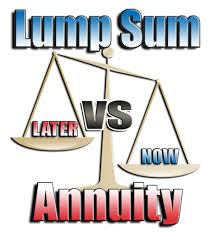
Many people are put off investing because they assume they need a large lump sum of money to invest. But it is possible, and sometimes preferable, to invest by making regular payments of as little as GH¢50 into a fund.

How Monthly Payments Help
Regular payments into an equity fund are not only easier for most people, they can benefit from the ‘cedi cost averaging’ effect. Because stock market prices may be up one month and down the next, monthly payments mean that you’ll pay an average price during the course of the year.

You can also gain a better picture of the market, which means you are less likely to invest in shares which are actually rising only temporarily before sharply falling again. Regular payments can also be less risky than lump sum investments: if the market collapses, payments can be stopped.

However, the more you invest and the longer you invest for, the greater the potential return. So if you can afford to invest a lump sum at a time when the market is rising, you have a distinct advantage over a regular payment investor.

Lump Sum Investment: How to Spread the Risk
Getting a large amount of money out of the blue can be quite overwhelming, and it can be tempting to rush out and spend it all on frivolous things which depreciate as soon as they leave the shop. If you’re lucky enough to receive a windfall, putting it away in a high interest savings account and ‘sleeping on it’ until you decide what you really want to do with it, can often save regrets later.

Before investing your money, consider paying off any debts you may have. Provided that the interest you pay on loans is more than the returns you could earn from your investments, this makes clear financial sense. As well as leaving you with more disposable income, getting rid of debts is usually a weight off your mind.

Spreading your money across different products of varying degrees of risk generally gives you the best chance of making your money grow, while retaining a measure of security.

Savings and Investments Series: Why Invest?

WHY INVEST?
We all have goals that we want to achieve in life. Unfortunately, many of them come with a large and heavy price tag. On its own, the interest that you earn on your savings account is not usually enough to meet the cost of these long-term plans. Your cherished ambitions are likely to remain just that.

This is where investment comes in. Making the right investment now could help you turn your dreams into reality. You could pay off your mortgage, take early retirement, provide for your daughter’s wedding, support your children through university or college, take a career break and travel the world or buy a place in the sun. Whatever your dream, investing for it now should make it much more achievable.

How Long You Should Invest
Investing is not usually a ‘get rich quick’ scheme. You should think of it as a decision taken for a minimum of five years, and often for longer. Because of this, you need to think ahead, considering your circumstances not just now, but in the future. You also need to bear in mind that investment carries a varying degree of risk, and that the value of investments can go as well up.

Long-term investments aim to provide you with a ‘real’ return on your investment, one that beats the gradual erosion of the purchasing power of your money through inflation. This growth can take the form of regular income, long-term capital growth or a combination of the two.

You could also aim to choose a combination of savings (put aside where you can easily get at them in an emergency) and investments.

Savings and Investments Series: Savings – Expect the Unexpected

SAVINGS: Expect the Unexpected

We can all expect rainy days to come along in life, even though we don’t know when. Putting some money aside for unforeseen expenses or changes in circumstances is a sensible precaution.

Whether the ’emergency’ is minor, such as needing new parts for your car, or major, such as having an unpaid leave from work, it is best to be prepared.

As a rough guide, you may wish to put aside enough money to last you for at least three months, and the best place for such ’emergency funds’ is often a bank. So if the worst happens, you can get your hands on your money immediately.


How do I choose the right account?

Bank interest rates vary a great deal. Although most savings accounts offer instant access, some require you to give notice of withdrawal. By all means you, take advantage of this, but don’t automatically settle for a poorer interest rates or high charges. Make sure the right account that will suit you.

Savings and Investments Series: Introduction

It is always a good idea to prepare financially, no matter your stage in life. It makes sense to get the most from your money, whether you are saving for a rainy day, or investing for a brighter future.

But the question is: Is your money working as hard as it should?

It would be very easy to leave all your money in your current account and forget about it. An awful lot of people do. But in the long term, this mindset is not likely to give you the best return on your money.

Nonetheless, getting the most from your money is quite as simple as it sounds. It takes time, a little thought and planning. There are many ways to save and invest, and an ever-growing number of savings and investment products to choose from. Selecting the right ones depends on what you want from your money, what your individual circumstances are and what likes and dislikes you have in relation to investment. All of these factors should be taken into account when planning your financial future.

This series ‘Savings and Investments’ will provide information on how to get the most from your money, at every stage in life. It will also explain the wide range of savings and investments products that you might want to consider, and point you in the direction of expert financial advice, should you feel you need it.

PS: The ‘Savings and Investments Series’ is one blog that will touch various aspects involved in savings and investments. So expect them in the coming days on our KCC Lens.

Select your currency
GHS Ghana cedi